-
 Scindia Museum
This museum occupies some 35 rooms of the Scindias’ opulent Jai Vilas Palace, built by Maharaja Jayajirao in 1874 using prisoners from the Gwalior fort. The convicts were rewarded with the 12-year job of weaving the hall carpet, one of the largest in Asia.
Scindia Museum
This museum occupies some 35 rooms of the Scindias’ opulent Jai Vilas Palace, built by Maharaja Jayajirao in 1874 using prisoners from the Gwalior fort. The convicts were rewarded with the 12-year job of weaving the hall carpet, one of the largest in Asia.
-
Malik
Perched upon a platform is this beast of a cannon – over 4m long, almost 1.5m in diameter and estimated to weigh 55 tonnes. Cast in 1549, it was supposedly brought to Bijapur as a war trophy thanks to the efforts of 10 elephants, 400 oxen and hundreds of men!
-
Mahamaham Tank
Surrounded by 17 pavilions, the huge Mahamaham Tank is one of Kumbakonams most sacred sites. It’s believed that every 12 years the waters of Indias holiest rivers, including the Ganges, flow into it, and at this time a festival is held; the next is due in 2016.
-
Lohani Caves
Local guides seem unsure as to just how old these sculpted caves are, but some insist that a now-blocked tunnel leads from the caves to Dhar, 35km away. One thing is certain, they command a fabulous view of the ravine below, which you can hike down to from here.
-
Netaji Subhas National Institute of Sports
The Netaji Subhas National Institute of Sports occupies a wing of the vast Moti Bagh palace, constructed by Maharaja Narendra Singh in 1847. The museum contains exhibits on Indian sporting heroes, including Punjabi sprinter Milkha Singh, ‘the Flying Sikh’.
-
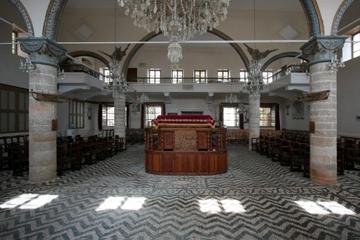
Maghen David Synagogue
The Maghen David Synagogue looks outwardly very much like a large sturdy church with its red-and-yellow brickwork, spired tower and trefoiled windows. To get inside youll probably need to contact the Community Affairs office at 63 Park St (tel 9831054669).
-
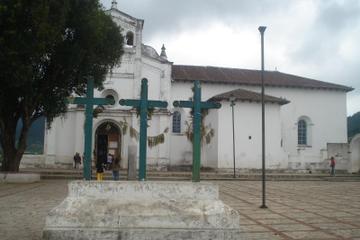
Mount Church
Located about 500m southeast of Sat Burnzam Ghor and a fair climb up Monte Hill, Margao’s only hill, Mount Church is a simple whitewashed building, faced by a similarly diminutive piazza cross. A detour up here is worth it for the view, all the way out to Colva.
-
Mosque of Akhund Mulla Shah
Built in 1649, the mosque of Akhund Mullah Shah is only a chunky stone shell set amid plane trees amid more profundly ruined stone structures from which there are sweeping views. Its worth a brief stop on the approach to the bigger Makhsoom Sahib Shrine complex.
-
Scottish Cemetery
Over 1600 ragged old graves, predominantly colonial-era Scottish, lie in this gated graveyard whose jungle-like overgrowth has been cut back in recent years. The friendly gate-keeper, himself of Indo-Scottish descent, is usually happy to show guests around.
-
Kathok Wodsallin Gompa
This newly contructed gompa opposite Hotel Tashi Gang has an impressively stern statue of Guru Padmasambhava surrounded by a collection of yogis, gurus and lamas in glass-fronted compartments. The coloured motifs on the walls provide a few striking photo-ops.
-
Hanumangarhi
This is one of the town’s most popular temples, and is the closest of the major temples here to the main road. Walk up the 76 steps to the ornate carved gateway and the fortresslike outer walls, and join the throng inside offering prasad (temple-blessed food).
-
Badalgarh
Northwest of Khetri Mahal, Badalgarh (originally called Fazalgarh after its constructor, Nawab Fazal Khan) is a mighty 16th-century fort, dating from the period of the nawabs. It belongs to the Dundlod family and is closed to the public, awaiting renovation.
-
Asar Mahal
Built by Mohammed Adil Shah in about 1646 to serve as a Hall of Justice, the Asar Mahal once housed two hairs from Prophet Mohammed’s beard. The rooms on the upper storey are decorated with frescoes and a square tank graces the front. It’s out of bounds for women.
-
Zoological Gardens
Yann Martel famously based the animals in his Life of Pi on those he observed in Trivandrum’s zoological gardens. Shaded paths meander through woodland, lakes and native forest, where tigers, macaques and hippos gather in reasonably large open enclosures.
-
Garden of the 5 Senses
This relaxing garden is filled with intriguing contemporary sculptures, formal gardens, dangling wind chimes and lily ponds. There are several upmarket restaurants and bars close to Gate 3. To get here, take an autorickshaw or walk from Saket metro station.
-
Drikung Kagyu Gompa
The ochre-red Tibetan-style Drikung Kagyu Gompa, with its academy of Buddhist studies, stands on the right immediately inside the main entrance arch to the lake from the road. Its temple features a large, central Sakyamuni statue, with Padmasambhava to the left.
-
Folk Art Museum
This museum has excellent displays on traditional Kachchh culture, including reconstructed Rabari bhungas (mud-and-mirrorwork huts), musical instruments, many wood and stone carvings and much more. It’s a further 700m south of the Kachchh Museum, off Mandvi Rd.
-
Butterfly Conservatory of Goa
Also called Mystic Meadows, this small butterfly sanctuary, 5km north of Ponda, houses more than 100 species of free-flying butterflies (eg it’s not enclosed). It’s a labour of love for the owners and worth a look if you’re visiting nearby spice plantations.
-
Agnigarh Hill
Nearly 1km east along the narrow, winding riverside lane is Agnigarh Hill, which might have been the fire fortress site of Banasura (the demon son of the monkey god Bali). The park has peaceful greens and great vistas of the Brahmaputra River that flows nearby.
-
Tibet Museum
The museum tells the story of Tibetan history, the Chinese occupation and the subsequent Tibetan resistance and exodus, through photographs, video and clear English-language display panels. A visit here is a must. Documentaries (₹10) are shown at 11am and 3pm.
Total
2522 -travel
FirstPage PreviousPage NextPage LastPage CurrentPage:
66/127 20-travel/Page GoTo Page: