-
 Goslarer Museum
This museum offers a good overview of the natural and cultural history of Goslar and the Harz. One room contains the treasures from the former Goslar Dom, and there’s also a cabinet with coins dating from the 10th century.
Goslarer Museum
This museum offers a good overview of the natural and cultural history of Goslar and the Harz. One room contains the treasures from the former Goslar Dom, and there’s also a cabinet with coins dating from the 10th century.
-
Georgenkirche
The baptismal church of St Elizabeth and Johann Sebastian Bach. The reformer Martin Luther preached here while under papal ban. From June to September, free 30-minute organ concerts take place at 11am Monday to Saturday.
-
Museum für Musikinstrumente
At the fabulous Musikinstrumenten-Museum, housed inside the Grassi Museum complex, you can discover music from five centuries in the prestigious and rarity-filled exhibits, as well as an interactive sound laboratory.
-
Schatzkammer
The jewellery, porcelain and precious furnishings on display here belonged, for many years, to the wealthiest dynasty in Germany. The fortune, administered by Prince Albert II, is still estimated at well over €1 billion.
-
Staatliches Museum Ägyptischer Kunst
This old-school museum of late 19th-century Egyptian finds was closed at the time of research, but due to reopen in a purpose-built structure at Gabelsbergerstrasse 35 (near the Alte Pinakothek) in the summer of 2013.
-
Universität Jena – Main Campus
The main campus of the Friedrich Schiller Universität Jena is located on Ernst-Abbe-Platz in a building that formerly belonged to the Carl Zeiss optics factory. The square is dotted with abstract sculptures by Frank Stella.
-
Martinskirche
The medieval Martinskirche, once part of a Franciscan monastery, demands attention on the northern side of Rathausplatz. Severely damaged in WWII, it was rebuilt in the ascetic style typical of this mendicant order.
-
Marktkirche Zum Heiligen Geist
Marktkirche Zum Heiligen Geist was consecrated in 1642 and - another local record - is the countrys largest wooden church. While some much needed restoration work continues, it will remain closed throughout the winter.
-
Magniviertel
This arty precinct-cum-traditional quarter is nestled around the 11th-century Magnikirche. Some restaurants and bars have colonised the area’s many restored half-timbered houses and there are occasional boutique stores.
-
Molecule Man
Right in the river, this giant aluminium sculpture shows three bodies embracing and is meant as a symbol of the joining of the three districts of Kreuzberg, Friedrichshain and Treptow across the former watery border.
-
HafenCity InfoCenter
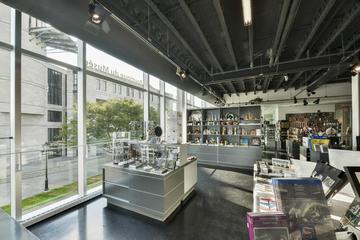
You can pick up brochures and check out detailed architectural models and installations that give a sense of the immensity of the project. The centre offers a program of free guided tours through the evolving district.
-
Drehturmcafe
For memorable 360-degree views, ride the lift up to the top of the old water tower, which is now the rotating Drehturmcafe . Get there by cutting north on Kupferstrasse from Ludwigsallee, then left on Belvedereallee.
-
Divi
The Gothic Divi-Blasii-Kirche was built by the Teutonic Knights in the 13th and 14th centuries, based on the style of French Gothic cathedrals. It was here that in 1707–08 Johann Sebastian Bach worked as an organist.
-
Botanischer Garten der Universität
Orchids, ferns and Madagascan succulents thrive in the verdant University Botanical Garden, part of the university’s right-bank Neuenheimer Feld campus. The garden is 2.5km northwest of Bismarckplatz, served by trams 4 and 5.
-
Abdinghofkirche
The Abdinghofkirche is easily recognised by its twin Romanesque towers. Once a Benedictine monastery, its been a Protestant church since 1867 and is rather austere with its whitewashed and unadorned walls and a flat wooden ceiling.
-
Schloss & Park Luisium
East of central Dessau, about 4km toward Wörlitz, Schloss Luisium is an intimate neoclassical refuge framed by an idyllic English garden scattered with neo-Gothic and classical follies. It is reached via bus 13 to Vogelherd.
-
Prinzenpalais
One of the three buildings comprising Oldenburg’s Museum of Art & Cultural History, this branch focuses on German artists, beginning with Romanticism and neoclassicism of the mid-19th century and culminating in post-1945.
-
Römische Villa
The best preserved and, perhaps, most lavish Roman mosaic north of the Alps can be seen in the reconstructed Römische Villa . Comprising three million tiny stones, the stunning 160-sq-metre floor dates from the 3rd century AD.
-
Haus der Kunst
This stern art deco edifice was built in 1937 to showcase Nazi art, but now the Haus der Kunst presents works by exactly the artists whom the Nazis rejected and deemed degenerate. Temporary shows focus on contemporary art and design.
-
Stadtkirche St Michael
This Gothic church one block north of the town square is famous for having Martin Luther’s original engraved tombstone (there’s another in the Schlosskirche in the town of Wittenberg that is actually a 19th-century replica).
Total
2004 -travel
FirstPage PreviousPage NextPage LastPage CurrentPage:
38/101 20-travel/Page GoTo Page: