-
 Florentinerberg
The Romans used to cool off here; check out the ruins of the original baths at the foot of the hill. Nowadays, the serene botanical gardens nurture wisteria, cypress trees, orange and lemon groves.
Florentinerberg
The Romans used to cool off here; check out the ruins of the original baths at the foot of the hill. Nowadays, the serene botanical gardens nurture wisteria, cypress trees, orange and lemon groves.
-
Bomann
This museum for cultural history was completely updated in 2013 and houses a broad historic collection alongside a new collection on the work, lives and times of ordinary people in the region.
-
1. Weltgrösste Kuckucksuhr
The worlds oldest-largest cuckoo clock kicked into gear in 1980 and took local clockmaker Joseph Dold three years to build by hand. A Dold family member is usually around to the explain the mechanism.
-
Brockenhaus
The Brockenhaus has a cafe, interactive displays, and a viewing platform. In summer, rangers conduct one-hour tours of the plateau, which include the alpine garden , or separate tours of the alpine garden.
-
Prinzregententheater
One of Bogenhausens main landmarks is the Prinzregententheater. Its dramatic mix of art nouveau and neoclassical styles was conceived under Prince Regent Luitpold as a festival house for Richard Wagner operas.
-
Rupertinum
In the heart of the Altstadt, the Rupertinum is the sister gallery of the Museum der Moderne and is devoted to rotating exhibitions of modern art. There is a strong emphasis on graphic works and photography.
-
Planetarium Wolfsburg
Built in 1982 after VW bartered Golfs for Zeiss projectors with the GDR, this planetarium stages laser and rock shows, star shows and spoken-word performances set to the stars. Show times vary; see the website.
-
Mariensäule
Mariensäule (St Marys Column) was erected in 1638 to celebrate Bavarias victory over Swedish troops during the Thirty Years War. Its topped by a golden statue of the Virgin Mary balancing on a crescent moon.
-
Historiensäule
The History Column portrays 2000 years of Koblenz history in 10 scenes perched one atop the other – the WWII period, for instance, is represented by a flaming ruin. An English-language panel provides context.
-
Deutsches Salzmuseum
The Deutsches Salzmuseum explains (in German only) how Lüneburg’s precious food preservative made the town such an important player in the Hanseatic League. Displays are peppered with old salt implements.
-
Deutsches Filmmuseum
Permanent and changing exhibitions chart the history of cinema, how films are made, and specific genres and artists at this dynamic museum. Signs are in English and German; theres also an art-house cinema here.
-
Staatlicher Hofkeller Würzburg
Atmospherically housed in the cellar of the Residenz is a winery owned and run by the Bavarian government, Staatlicher Hofkeller Würzburg. It produces some exceptional wines; tours conclude with a tasting.
-
Riverfront Promenade
Beautiful parkland runs along both banks of the Main River – perfect for strolling, running, cycling or a picnic. The most popular section is between the two pedestrian bridges, Holbeinsteg and Eiserner Steg .
-
Severuskirche
The late Romanesque 13th-century Severuskirche is built on the site of Roman military baths. Inside are polychrome wall paintings, a hanging cross from 1225 in the choir, and spiderweb-like vaulted ceilings.
-
Kappeln
This tiny fishing village is near the mouth of the Schlei. It makes for a good stroll with some historic buildings and old boats. You can cycle here (about 32km), but the best way to arrive is on a tour boat.
-
Dreikönigenhaus
The 13th-century Dreikönigenhaus is a late Gothic residence with a geometrically painted facade. Originally, the entrance was up on the 1st floor, reachable by stairs that could be retracted in case of danger.
-
Bauhaus Museum
Considering that Weimar is the 1919 birthplace of the influential Bauhaus school of art, design and architecture, this museum is a rather modest affair. A new, representative museum is expected to open in 2018.
-
Zollverein Coal Mine
Themed public tours (€4.50 to €15) zero in on the complex’s industrial heritage, its architecture and its art, but for now they’re in German only.Tram 107 travels to Zollverein from the Hauptbahnhof.
-
Römerturm
Vestiges from the ancient settlement include a Roman arch from the former town wall outside the Dom and the Römerturm, a tower standing among buildings at the corner of St-Apern-Strasse and Zeughausstrasse.
-
Schabbellhaus
The town’s historical museum is in the Renaissance Schabbellhaus in a former brewery (1571), just south of St-Nikolai-Kirche across the canal. It is undergoing massive reconstruction at least until 2017.
Total
2004 -travel
FirstPage PreviousPage NextPage LastPage CurrentPage:
35/101 20-travel/Page GoTo Page:
 Garth’s Encore Shows Are a Sell Out But Anti-Scalping Measures May Irritate Fans
 Where to stay in Tokyo – Ryokans, temples lodgings, capsules and first class hotels
 Yuyuan Garden
 Otto Weidt Museum
 The world's most expensive dessert
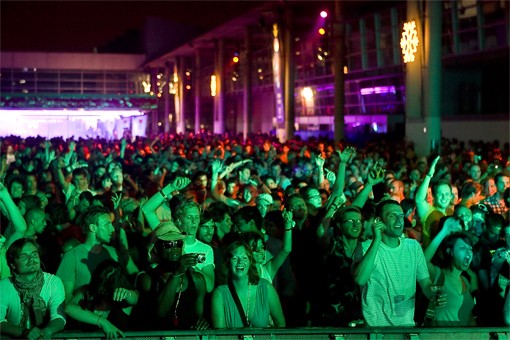 A Sónar Festival in Barcelona travel guide – electronic music and multimedia art in Spain’s coolest city