-
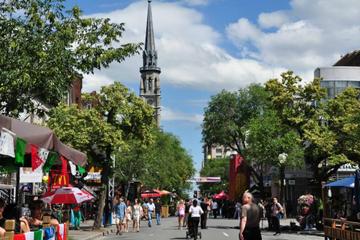
 St Lambertuskirche
The twisted tower of the 14th-century St Lambertuskirche shadows treasures that span several centuries. Look for the Gothic tabernacle, the Renaissance marble tombs, baroque altars and modern windows.
St Lambertuskirche
The twisted tower of the 14th-century St Lambertuskirche shadows treasures that span several centuries. Look for the Gothic tabernacle, the Renaissance marble tombs, baroque altars and modern windows.
-
Museum August Kestner
Decorative arts through the ages are the focal point of the Kestner Museum, where you’ll see everything from Bauhaus-style cutlery to a very impressive collection of Greek and Egyptian antiquities.
-
Herbertstrasse
Along Davidstrasse, a painted tin wall bars views into Herbertstrasse, a block-long bordello that’s off-limits to men under 18 and to women of all ages. Its the notorious sinful centre of the district.
-
Gäubodenmuseum
This intimate museum is one of Germanys most important repositories of Roman treasure. Displays include imposing armour and masks for both soldiers and horses, probably plundered from a Roman store.
-
Tauberfränkisches Landschaftsmuseum
Follow the remains of the medieval town walls to the Kurmainzisches Schloss, which now houses the Tauberfränkisches Landschaftsmuseum, where you can learn more about Tauberbischofsheims past.
-
Neuenheim River Bank
The Neckar’s grassy northern bank between Theodor-Heuss-Brücke and Ernst-Walz-Brücke is a favourite student hang-out when the weather is warm. Small cafes sell snacks and drinks including beer.
-
Überwasserkirche
The Überwasserkirche (officially known as Liebfrauenkirche) is a 14th-century Gothic hall church with handsome stained-glass windows. The nickname was inspired by its location right by the Aa.
-
Schloss Belvedere
Set in the lovely Belvedere Park, this palace has displays of glass, porcelain, faience and weapons from the late 17th and 18th centuries. The easiest way to reach it is by bus 1 from Goetheplatz.
-
Ludwig Forum für Internationale Kunst
In a former umbrella factory, the Ludwig Forum für Internationale Kunst trains the spotlight on contemporary art (Warhol, Immendorf, Holzer, Penck, Haring) and also stages progressive changing exhibits.
-
Schloss Favorite
Sitting in parkland, a five-minute walk north of the Residenzschloss, is the petit baroque palace Schloss Favorite, graced with Empire-style furniture. Duke Eugen held glittering parties here.
-
Salzhaus
Overlooking fountain-studded Neustadt square, the weighty Salzhaus was originally a 16th-century salt storage house and now brims with market stalls, shops, restaurants and the public library.
-
Universitätsbibliothek
The University Library was built in massive Wilhelmian style from 1901 to 1905. Upstairs you can see rare books and prints from its superb collections in the corner Ausstellungsraum (exhibition room).
-
Stadtkirche St Andreas
Stadtkirche St Andreas is a late-Gothic hall church that was heavily embellished during the baroque era. Note especially the wall-sized family tree of the local rulers and the ornate epitaphs.
-
Petrisberg Multilingual Panel
Next to the Petrisberg Aussicht stop for buses 4 and 85, a multilingual panel traces local history from the first known human habitation (30,000 years ago) through the last ice age to the Romans.
-
Liebfraukirche
At the western end of Reichstrasse rises this 15th-century Gothic church with original frescos and a curiously sloping floor that drops 120cm. Swabias largest church bell (6550kg) swings in the belfry.
-
Freilichtmuseum
Outside Salzburg, near Untersberg, the open-air Freilichtmuseum harbours around 100 archetypal Austrian farmhouses and has tractors to clamber over, goats to feed and a huge adventure playground.
-
Stiftsmuseum
This museum in the 1000-year-old abbey near the Dom contains treasures, including reliquaries, sculptures and graphics. The illuminated manuscripts always amaze with their detailed, hand-drawn beauty.
-
Römische Bäder
Karl Friedrich Schinkel, aided by his student Ludwig Persius, dreamed up the so-called Roman Baths in Park Charlottenhof. Despite the name, its actually a picturesque cluster of Italian-style villas.
-
Astronaut Mural
One of Berlin’s best known works of street art is this monumental stencil-style piece inspired by the US-Soviet space race and created by Victor Ash as part of the 2007 Backjumps urban art festival.
-
Kollegienkirche
Johann Bernhard Fischer von Erlach’s grandest baroque design is this late-17th-century university church, with a striking bowed façade. The high altar’s columns symbolise the Seven Pillars of Wisdom.
Total
2004 -travel
FirstPage PreviousPage NextPage LastPage CurrentPage:
34/101 20-travel/Page GoTo Page: