-
 Chiesa del Carmine
Higher up in the old town, down a side street off the scalinata, the Chiesa del Carmine is worth a quick look for its huge terracotta presepe (nativity scene – presepi are a Caltagirone tradition) covering 72 sq metres.
Chiesa del Carmine
Higher up in the old town, down a side street off the scalinata, the Chiesa del Carmine is worth a quick look for its huge terracotta presepe (nativity scene – presepi are a Caltagirone tradition) covering 72 sq metres.
-
Duomo di San Rufino
The 13th-century Romanesque church, remodelled by Galeazzo Alessi in the 16th century, contains the fountain where St Francis and St Clare were baptised. The facade is festooned with grotesque figures and fantastic animals.
-
Museo della Grande Guerra
The tragic, gory history of the WWI Italian-Austrian front is explored at the Museo della Grande Guerra, including a to-scale re-creation of a trench, along with a room dedicated to the much-loved general, Armando Diaz.
-
Spiaggia Capriccioli
Dotted with granite boulders and backed by fragrant macchia, this gorgeous half-moon bay has water that goes through entire spectrum of blues and is shallow enough for tots. Umbrellas and sunbeds are available to rent.
-
Palazzo dei Cavalieri
Palazzo dei Cavalieri was redesigned by Vasari and features remarkable graffiti decoration. Both palace and piazza are named after the Knights of St Stephen, a religious and military order founded by Cosimo I de Medici.
-
Rocca Meli Lupi
Twenty-eight kilometres northwest of Parma is Soragna, site of the 14th-century Rocca Meli Lupi . A fine example of early baroque, it retains much of the furniture that the Meli Lupi family added in the 16th century.
-
Market
Ventimiglia is best known for its huge Friday market when hundreds of stalls sell food, clothes, homewares, baskets and everything else under the sun. The market is concentrated on Piazza della Libertà, near the river.
-
Marienberg
The beautiful Benedictine monastery of Marienberg, perched up some 1340m above Malles , has a museum dedicated to its eight centuries of monastic life, though the view and architecture are worth the drive up alone.
-
Padiglione delle Navi
Open only at the weekend at set times for a maximum of 25 people, the Hall of Ships is a vast 2000 sq metre warehouse with a fabulous exhibition of typical Venetian luggers, gondolas, racing boats and military vessels .
-
Duomo di San Martino
It is impossible to miss Pietrasantas attractive cathedral, dating from 1256, on the central square. Its distinctive 36m-tall, red-brick bell tower is actually unfinished; the red brick was meant to have a marble cladding.
-
Chiesa di San Damiano
Its a 1.5km olive-tree-lined stroll southeast of the centre to the church where St Francis first heard the voice of God and where he wrote his Canticle of the Creatures . The serene surroundings are popular with pilgrims.
-
Chiesa di San Luca
In the upper village, the 16th-century Chiesa di San Luca features a richly colourful majolica floor, paintings by the 16th-century artist Giovanni Bernardo Lama and a late-17th-century bust of St Luke the Evangelist.
-
Castello di Arco
From the medieval village of Arco (population 16,160), 5km north of Riva, a 20-minute stroll through olive groves to Castello di Arco limbers up the muscles for the more strenuous terrain awaiting walkers a few kilometres north.
-
Casa di Nettuno e Anfitrite
This aristocratic pad takes its name from the extraordinary mosaic in the nymphaeum (fountain and bath). The warm colours in which the sea god and his nymph bride are depicted hint at how lavish the original interior must have been.
-
Casa dell’Atrio a Mosaico
An ancient mansion, the House of the Mosaic Atrium harbours extensive floor tile-work, although time and nature have left the floor buckled and uneven. Particularly noteworthy is the black-and-white chessboard mosaic in the atrium.
-
Carsiana Giardino Botanico
Local flora (best seen in spring) buds and flowers at the Carsiana Giardino Botanico in Sgònico. You will see everything from local oaks to various types of rhododendron. Take bus 42 from Trieste to Prosecco and change onto bus 46.
-
Pozzo Etrusco
Just north of Piazza IV Novembre, you can venture down into a 37m-deep well. Dating from the 3rd century BC, it was the main water reservoir of the Etruscan town, and, more recently, a source of water during WWII bombing raids.
-
Porta San Niccolò
Built in the 1320s, the best preserved of the city’s medieval gates still stands sentinel on the banks of the Arno. Behind it, a monumental staircase designed by Giuseppe Poggi winds its way up towards Chiesa di San Miniato al Monte.
-
Museo Civico di Storia Naturale
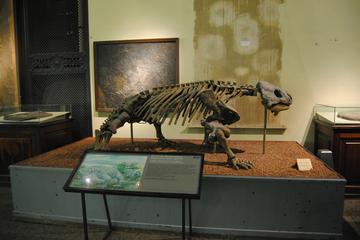
The Museo Civico di Storia Naturale features fossils, minerals and stuffed birds.
-
Museo Dicesano di Arte Sacra
On Piazza Garibaldi, housed in the former Santa Chiara convent, this small museum has an eclectic collection of religious and contemporary art. A highlight is a detailed presepe (nativity scene) depicting 19th-century Sulmona.
Total
3296 -travel
FirstPage PreviousPage NextPage LastPage CurrentPage:
68/165 20-travel/Page GoTo Page: